Copyright © 2025 Chuangming Coupling (Jiangsu) Co.,Ltd.
Five Installation Tips for Jaw Couplings, for More Durable and Standardized Assembly
2026-03-03
Jaw couplings are widely used in various transmission equipment such as fans, water pumps, reducers, and motors, thanks to their advantages of simple structure, cushioning and shock absorption, and strong ability to compensate for deviations. Their installation quality directly determines the operational stability of the equipment, the service life of the elastic body, and the failure rate of the entire machine. Mastering scientific installation skills can not only avoid assembly errors but also extend the service life of the coupling and supporting equipment. Below are five core installation tips, which are highly practical and suitable for most working conditions.
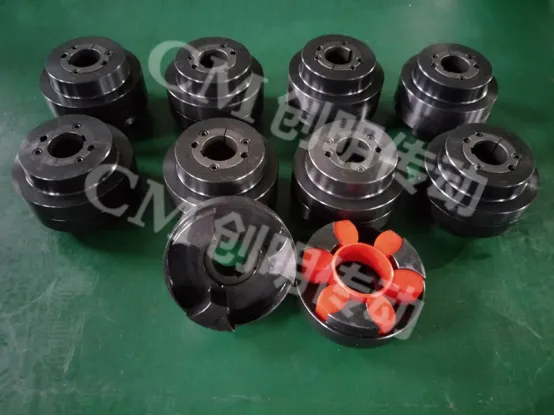
I. Thoroughly Clean Before Assembly to Eliminate Impurity Hidden Dangers
The cleaning work before installation is the foundation but is often overlooked in on-site operations. It is necessary to thoroughly clean the motor shaft, driven shaft hole, keyway, coupling end face, and mating parts of oil stains, rust, burrs, iron filings, and dust. You can wipe them with anhydrous ethanol or a special cleaning agent, then dry them with a clean cotton cloth.
Residual impurities in the shaft hole or keyway will cause uneven interference fit, scratch the shaft neck, and easily lead to loosening and increased vibration during long-term operation; burrs will also scratch the jaw elastic body and accelerate the damage of the buffer component. After cleaning, check that the shaft and shaft hole are free of deformation and damage before proceeding with subsequent assembly, so as to eliminate hidden dangers from the source.
II. Precisely Align the Two Shafts and Strictly Control the Deviation Range
The alignment accuracy of the two shafts is the key to the stable operation of the jaw coupling. If the radial, angular, and axial deviations exceed the allowable range, it will directly cause the elastic body to heat and wear, abnormal damage to the bearing, and excessive vibration and noise of the equipment.
When installing, priority should be given to using a dial indicator for alignment, avoiding rough assembly by naked eyes or hand feel: strictly control the radial displacement, angular deviation, and axial movement within the technical parameters allowed by the manufacturer; ensure the coaxiality of the motor shaft and the driven shaft during assembly. If the alignment error is too large, even if there is no abnormality in short-term operation, it will greatly shorten the service life of the components in the long run. High-precision alignment is the core link to reduce the equipment failure rate.
III. Install the Elastic Body Lightly and Fit Naturally, Forbid Forced Preloading
The jaw elastic body is the core buffer component of the coupling, mostly made of polyurethane or rubber, which achieves shock absorption and deviation compensation through the petal structure. During installation, it is strictly prohibited to force extrusion or violent knocking to avoid excessive preloading deformation of the elastic body.
The correct method is to naturally embed the elastic body between the claws of the two halves of the coupling, ensuring that the petals and claws fit evenly without extrusion or distortion. If forced compression assembly is performed, the elastic body will be in a stressed state for a long time, and will quickly heat up, age and crack during operation, losing the buffering effect, and also transmit vibration to the bearing and motor. Moderate fitting can not only give play to the shock absorption performance but also extend the service life of the elastic body.
IV. Reliable Axial Positioning to Prevent Operational Axial Movement
The failure of axial positioning is the main reason for the slipping, axial movement, and tooth disengagement of the coupling during operation. During assembly, it is necessary to use screws, retaining rings, lock nuts, and other methods for axial fixation according to the equipment working conditions, ensuring that the coupling is closely matched with the shaft without axial movement clearance.
Especially for equipment with frequent forward and reverse rotation, large start-stop impact, and high-speed operation, the axial positioning must be more firm. After installation, manually rotate the coupling to check for no axial displacement, no jamming or loosening, and confirm that the positioning is reliable before proceeding with subsequent debugging, so as to avoid equipment failures caused by axial movement during operation.
V. Recheck and Tighten After Test Run to Eliminate Loosening Risks
After the initial installation of the coupling, it cannot be directly put into heavy-load operation, and an idle test run should be carried out first. Run idly for 10-30 minutes to allow the coupling, shaft, and bearing to complete initial running-in, and eliminate assembly stress and the impact of thermal expansion and contraction.
Jaw couplings are widely used in various transmission equipment such as fans, water pumps, reducers, and motors, thanks to their advantages of simple structure, cushioning and shock absorption, and strong ability to compensate for deviations. Their installation quality directly determines the operational stability of the equipment, the service life of the elastic body, and the failure rate of the entire machine. Mastering scientific installation skills can not only avoid assembly errors but also extend the service life of the coupling and supporting equipment. Below are five core installation tips, which are highly practical and suitable for most working conditions.
I. Thoroughly Clean Before Assembly to Eliminate Impurity Hidden Dangers
The cleaning work before installation is the foundation but is often overlooked in on-site operations. It is necessary to thoroughly clean the motor shaft, driven shaft hole, keyway, coupling end face, and mating parts of oil stains, rust, burrs, iron filings, and dust. You can wipe them with anhydrous ethanol or a special cleaning agent, then dry them with a clean cotton cloth.
Residual impurities in the shaft hole or keyway will cause uneven interference fit, scratch the shaft neck, and easily lead to loosening and increased vibration during long-term operation; burrs will also scratch the jaw elastic body and accelerate the damage of the buffer component. After cleaning, check that the shaft and shaft hole are free of deformation and damage before proceeding with subsequent assembly, so as to eliminate hidden dangers from the source.
II. Precisely Align the Two Shafts and Strictly Control the Deviation Range
The alignment accuracy of the two shafts is the key to the stable operation of the jaw coupling. If the radial, angular, and axial deviations exceed the allowable range, it will directly cause the elastic body to heat and wear, abnormal damage to the bearing, and excessive vibration and noise of the equipment.
When installing, priority should be given to using a dial indicator for alignment, avoiding rough assembly by naked eyes or hand feel: strictly control the radial displacement, angular deviation, and axial movement within the technical parameters allowed by the manufacturer; ensure the coaxiality of the motor shaft and the driven shaft during assembly. If the alignment error is too large, even if there is no abnormality in short-term operation, it will greatly shorten the service life of the components in the long run. High-precision alignment is the core link to reduce the equipment failure rate.
III. Install the Elastic Body Lightly and Fit Naturally, Forbid Forced Preloading
The jaw elastic body is the core buffer component of the coupling, mostly made of polyurethane or rubber, which achieves shock absorption and deviation compensation through the petal structure. During installation, it is strictly prohibited to force extrusion or violent knocking to avoid excessive preloading deformation of the elastic body.
The correct method is to naturally embed the elastic body between the claws of the two halves of the coupling, ensuring that the petals and claws fit evenly without extrusion or distortion. If forced compression assembly is performed, the elastic body will be in a stressed state for a long time, and will quickly heat up, age and crack during operation, losing the buffering effect, and also transmit vibration to the bearing and motor. Moderate fitting can not only give play to the shock absorption performance but also extend the service life of the elastic body.
IV. Reliable Axial Positioning to Prevent Operational Axial Movement
The failure of axial positioning is the main reason for the slipping, axial movement, and tooth disengagement of the coupling during operation. During assembly, it is necessary to use screws, retaining rings, lock nuts, and other methods for axial fixation according to the equipment working conditions, ensuring that the coupling is closely matched with the shaft without axial movement clearance.
Especially for equipment with frequent forward and reverse rotation, large start-stop impact, and high-speed operation, the axial positioning must be more firm. After installation, manually rotate the coupling to check for no axial displacement, no jamming or loosening, and confirm that the positioning is reliable before proceeding with subsequent debugging, so as to avoid equipment failures caused by axial movement during operation.
V. Recheck and Tighten After Test Run to Eliminate Loosening Risks
After the initial installation of the coupling, it cannot be directly put into heavy-load operation, and an idle test run should be carried out first. Run idly for 10-30 minutes to allow the coupling, shaft, and bearing to complete initial running-in, and eliminate assembly stress and the impact of thermal expansion and contraction.