Copyright © 2025 Chuangming Coupling (Jiangsu) Co.,Ltd.
Adhere to Assembly Standards to Ensure Reliable Operation - Our Company Issues Standard Installation Guidelines for Shrink Discs
2026-03-20
Recently, to further improve the operational stability of industrial transmission systems and reduce equipment failure rates, our company officially released the Standard Installation and Operation & Maintenance Guidelines for Shrink Discs. Covering the entire process from pre-assembly preparation, installation procedures, torque control, post-operation maintenance to disassembly safety, the guidelines aim to help users in various fields such as wind power, metallurgy, mining, papermaking, printing, machine tools, reducers, new energy equipment, and automated production lines achieve long-term stable operation of their equipment.
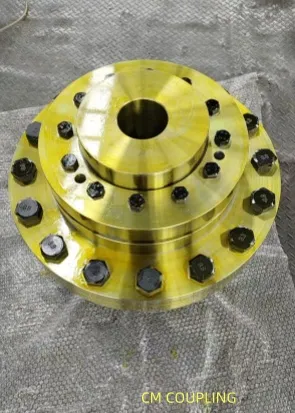
As an efficient keyless connection component, the shrink disc achieves gap-free and high-torque transmission between the shaft and hub by generating enormous locking force through conical surface extrusion. It boasts advantages such as high centering accuracy, convenient assembly and disassembly, no damage to shafts and holes, and overload protection, making it a key basic component in the transmission systems of modern high-end equipment. Currently, it is widely used in:
-
Wind power generating units: Connection of main shafts, gearboxes, and couplings;
-
Metallurgical and mining equipment: Transmission parts of crushers, conveyors, and winches;
-
Papermaking, printing, and textile machinery: Locking of roller systems, drums, and gearboxes;
-
Reducers, compressors, and pumps: Connection of high-speed shafts and output shafts;
-
New energy equipment, automated production lines, and precision machine tools: High-precision transmission and positioning.
In actual working conditions, if the shrink disc loosens, slips, or wears due to improper installation, it is likely to cause production line shutdowns and equipment damage, resulting in significant production losses. To address this, our company has formulated these standard installation guidelines based on years of product application experience, focusing on four core requirements:
-
Strict Cleaning Before Assembly: The mating surfaces of the shaft, hub, and shrink disc must be free of oil, rust, burrs, and dust. Applying glue or paint is prohibited to ensure reliable fitting of the friction surfaces.
-
Diagonal Step-by-Step Bolt Tightening: Adopt cross-diagonal and step-by-step tightening in 3-4 stages. It is strictly prohibited to tighten to full torque at one time, tighten unilaterally, or use an impact wrench to ensure uniform force bearing.
-
Precise Control of Installation Torque: Use a torque wrench strictly in accordance with the model parameters, and apply a small amount of grease to the thread parts to prevent seizing and ensure consistent pre-tightening.
-
Re-inspection and Maintenance After Operation: The bolts must be re-tightened after the equipment runs idly; the torque should be checked regularly during long-term operation to avoid damage to the shrink disc caused by high temperature, impact, or welding.
The guidelines also specify that the shrink disc must be loosened step by step diagonally during disassembly. Forcible knocking or prying is prohibited to prevent component deformation and damage to shafts and holes.
The technical director of our company stated that the service life and operational stability of the shrink disc largely depend on the installation quality. In the future, the company will continue to optimize the performance of the Shrink Disc series products, providing customers in various industries with selection plans, on-site installation guidance, operator training, and full-cycle technical services. With high-quality components and professional solutions, we will provide solid support for the efficient, safe, and stable operation of industrial equipment.
With excellent performance and reliable quality, our shrink discs have been supporting numerous equipment enterprises at home and abroad, and have been widely applied and highly recognized in transmission scenarios requiring heavy load, high precision, and high reliability.
Recently, to further improve the operational stability of industrial transmission systems and reduce equipment failure rates, our company officially released the Standard Installation and Operation & Maintenance Guidelines for Shrink Discs. Covering the entire process from pre-assembly preparation, installation procedures, torque control, post-operation maintenance to disassembly safety, the guidelines aim to help users in various fields such as wind power, metallurgy, mining, papermaking, printing, machine tools, reducers, new energy equipment, and automated production lines achieve long-term stable operation of their equipment.
As an efficient keyless connection component, the shrink disc achieves gap-free and high-torque transmission between the shaft and hub by generating enormous locking force through conical surface extrusion. It boasts advantages such as high centering accuracy, convenient assembly and disassembly, no damage to shafts and holes, and overload protection, making it a key basic component in the transmission systems of modern high-end equipment. Currently, it is widely used in:
-
Wind power generating units: Connection of main shafts, gearboxes, and couplings;
-
Metallurgical and mining equipment: Transmission parts of crushers, conveyors, and winches;
-
Papermaking, printing, and textile machinery: Locking of roller systems, drums, and gearboxes;
-
Reducers, compressors, and pumps: Connection of high-speed shafts and output shafts;
-
New energy equipment, automated production lines, and precision machine tools: High-precision transmission and positioning.
In actual working conditions, if the shrink disc loosens, slips, or wears due to improper installation, it is likely to cause production line shutdowns and equipment damage, resulting in significant production losses. To address this, our company has formulated these standard installation guidelines based on years of product application experience, focusing on four core requirements:
-
Strict Cleaning Before Assembly: The mating surfaces of the shaft, hub, and shrink disc must be free of oil, rust, burrs, and dust. Applying glue or paint is prohibited to ensure reliable fitting of the friction surfaces.
-
Diagonal Step-by-Step Bolt Tightening: Adopt cross-diagonal and step-by-step tightening in 3-4 stages. It is strictly prohibited to tighten to full torque at one time, tighten unilaterally, or use an impact wrench to ensure uniform force bearing.
-
Precise Control of Installation Torque: Use a torque wrench strictly in accordance with the model parameters, and apply a small amount of grease to the thread parts to prevent seizing and ensure consistent pre-tightening.
-
Re-inspection and Maintenance After Operation: The bolts must be re-tightened after the equipment runs idly; the torque should be checked regularly during long-term operation to avoid damage to the shrink disc caused by high temperature, impact, or welding.
The guidelines also specify that the shrink disc must be loosened step by step diagonally during disassembly. Forcible knocking or prying is prohibited to prevent component deformation and damage to shafts and holes.
The technical director of our company stated that the service life and operational stability of the shrink disc largely depend on the installation quality. In the future, the company will continue to optimize the performance of the Shrink Disc series products, providing customers in various industries with selection plans, on-site installation guidance, operator training, and full-cycle technical services. With high-quality components and professional solutions, we will provide solid support for the efficient, safe, and stable operation of industrial equipment.
With excellent performance and reliable quality, our shrink discs have been supporting numerous equipment enterprises at home and abroad, and have been widely applied and highly recognized in transmission scenarios requiring heavy load, high precision, and high reliability.