Copyright © 2025 Chuangming Coupling (Jiangsu) Co.,Ltd.
The toothed coupling tooth surface does not rub directly
2026-03-27
Improper overhaul and disassembly-assembly processes can cause tooth bending. After reinstallation, tooth deflection results in uneven circumferential force distribution on the gear coupling, leading to equipment vibration. Excessive weight deviation after assembly destroys the dynamic balance of the shaft system and also causes vibration. Common and obvious defects such as cracking or deformation of the coupling flange caused by hammering, and excessively large or small fitting clearances between the coupling bore and the journal are relatively easy to detect and repair.
The tooth surfaces of gear couplings are treated by gas nitriding. Torque is transmitted through tooth meshing, which improves surface performance without affecting the toughness of other parts. Gas nitriding is applied only to the tooth surfaces, while anti-seepage agents are coated on other areas to prevent nitrogen penetration. Slightly dark-colored surface spots with dull metallic luster on the internal and external teeth of gear couplings are directly caused by uneven nitrogen concentration in these areas compared with normal regions.
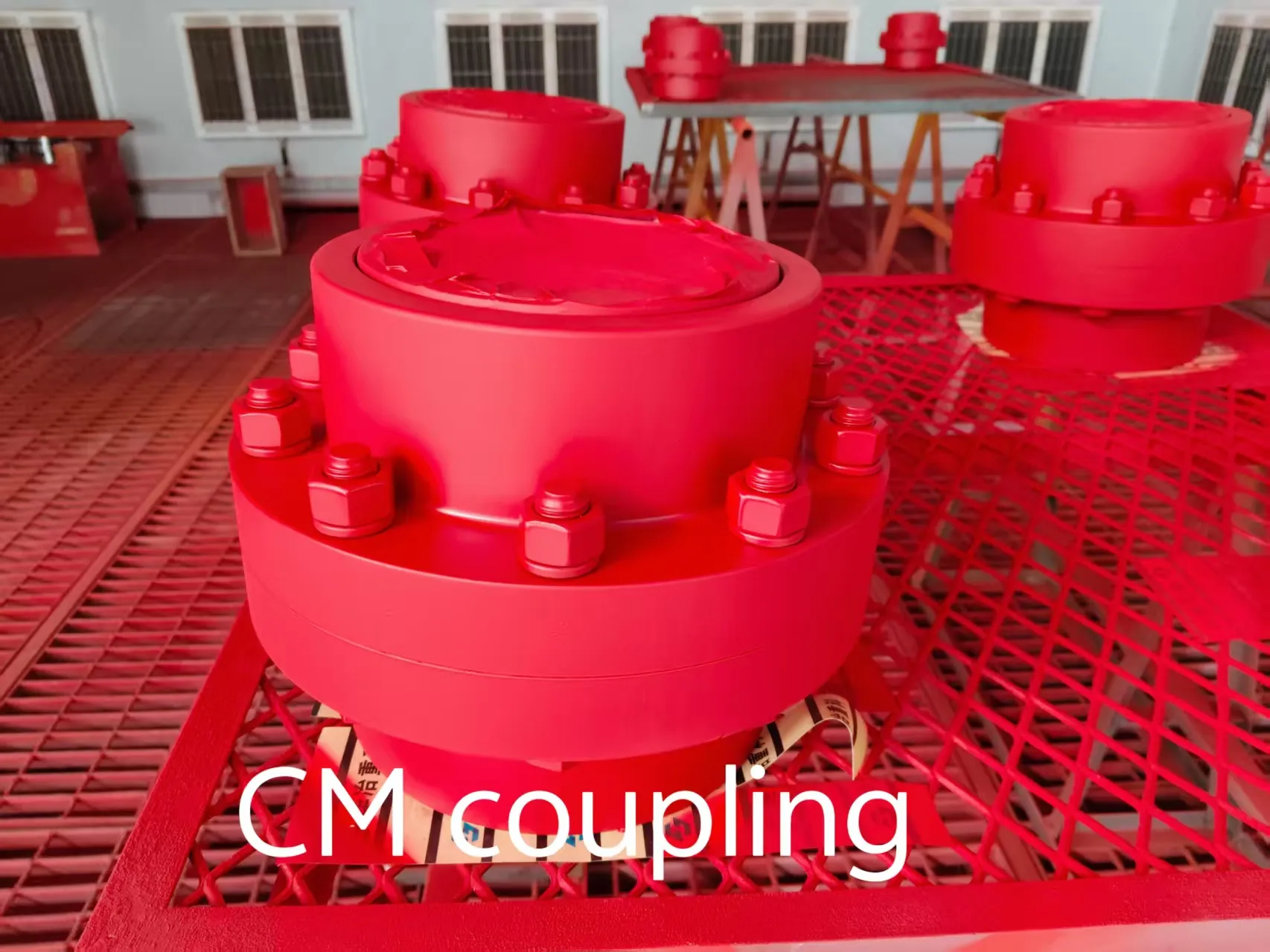
A gear coupling connects two halves through meshing of internal and external teeth. It is suitable for connecting horizontal drive shafts operating under heavy loads or at high speeds. Typical failure modes of gear couplings include gear tooth wear and tooth breakage. Lubrication forms an oil film between contacting tooth surfaces, preventing direct abrasive contact and reducing rapid wear.
Lubricating grease is a commonly used lubrication method for gear couplings. Similar to the lubrication of gear drives and rolling bearings, the lubricating oil or grease in the gearbox or bearing housing must not be fully filled; a certain space must be reserved. Generally, the lubricating grease should fill about two-thirds of the available space to avoid overheating during operation, which may cause equipment burnout.
Improper overhaul and disassembly-assembly processes can cause tooth bending. After reinstallation, tooth deflection results in uneven circumferential force distribution on the gear coupling, leading to equipment vibration. Excessive weight deviation after assembly destroys the dynamic balance of the shaft system and also causes vibration. Common and obvious defects such as cracking or deformation of the coupling flange caused by hammering, and excessively large or small fitting clearances between the coupling bore and the journal are relatively easy to detect and repair.
The tooth surfaces of gear couplings are treated by gas nitriding. Torque is transmitted through tooth meshing, which improves surface performance without affecting the toughness of other parts. Gas nitriding is applied only to the tooth surfaces, while anti-seepage agents are coated on other areas to prevent nitrogen penetration. Slightly dark-colored surface spots with dull metallic luster on the internal and external teeth of gear couplings are directly caused by uneven nitrogen concentration in these areas compared with normal regions.
A gear coupling connects two halves through meshing of internal and external teeth. It is suitable for connecting horizontal drive shafts operating under heavy loads or at high speeds. Typical failure modes of gear couplings include gear tooth wear and tooth breakage. Lubrication forms an oil film between contacting tooth surfaces, preventing direct abrasive contact and reducing rapid wear.
Lubricating grease is a commonly used lubrication method for gear couplings. Similar to the lubrication of gear drives and rolling bearings, the lubricating oil or grease in the gearbox or bearing housing must not be fully filled; a certain space must be reserved. Generally, the lubricating grease should fill about two-thirds of the available space to avoid overheating during operation, which may cause equipment burnout.