Copyright © 2025 Chuangming Coupling (Jiangsu) Co.,Ltd.
Building a Solid Line of Defense for Transmission Safety - An Analysis of the Core Functions of Friction-Type Safety Couplings
2026-04-10
In the core transmission systems of industrial production, the stable operation of key equipment such as motors and reducers directly determines production efficiency and safety. As a "safety guard" connecting the power source and the working mechanism, the friction-type safety coupling, with its unique structural design and precise protection mechanism, has become a key component to avoid equipment damage and reduce production losses, widely used in various industrial fields such as iron and steel, petrochemical, machine tools, and ports.
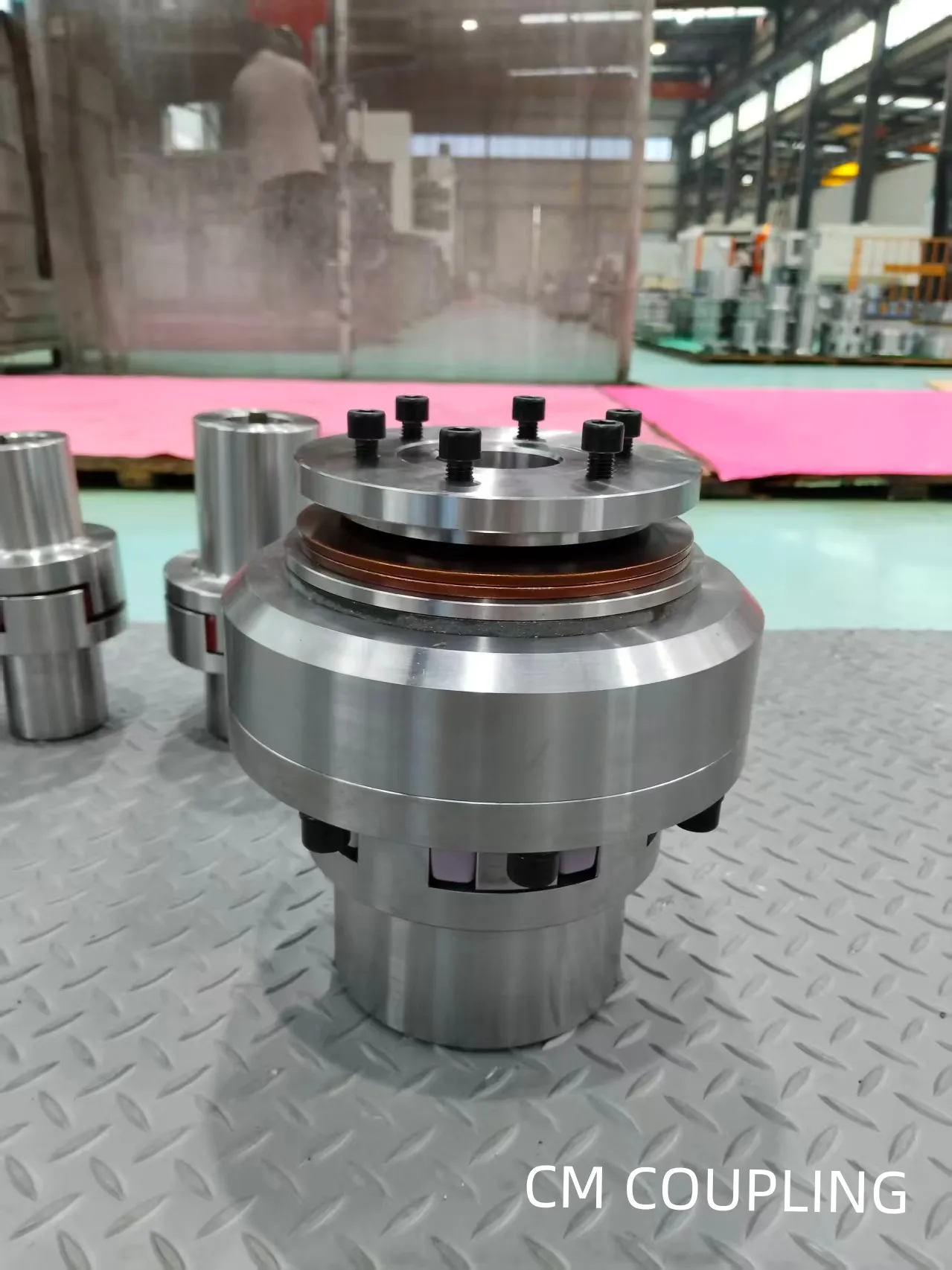
The friction-type safety coupling is a core category of safety couplings, whose core mission is to achieve the dual goals of "stable power transmission" and "intelligent overload protection". It breaks the single limitation that traditional couplings can only transmit torque. Through precise mechanical design, it builds an automatically responsive and quickly resettable safety barrier for the transmission system, solving the problem of equipment damage caused by sudden faults such as overload and jamming in industrial production.
Overload protection to safeguard the safety of core equipment is the most core function of the friction-type safety coupling. In the process of industrial transmission, sudden situations such as equipment jamming, material blockage, and load mutation often occur. Once the torque exceeds the rated range of the system, without effective protection, it will directly lead to irreversible faults such as motor burnout, reducer gear damage, and transmission shaft breakage. This not only requires high maintenance costs but also causes long-term unplanned downtime, resulting in huge production losses. According to industry data statistics, in key equipment such as extrusion granulation units, more than 20% of unplanned shutdowns are caused by coupling failure, and the friction-type safety coupling can avoid this risk from the root. Its working principle is based on the friction transmission and overload slipping mechanism, consisting of a driving disc, a driven disc, friction plates, and preload springs. Under normal working conditions, the axial pressure exerted by the preload springs makes the friction plates fit closely, and the torque of the driving end is stably transmitted to the driven end through static friction; when the torque exceeds the preset threshold, relative sliding occurs between the friction plates, instantly cutting off power transmission and limiting the continuous transmission of torque, thereby protecting core equipment such as motors and reducers from damage, which is equivalent to installing an "overload protector" for the transmission system.
Automatic reset to improve production continuity is a significant advantage that distinguishes the friction-type safety coupling from other types of safety couplings. Different from couplings such as shear pin type that require component replacement to resume transmission, the overload protection of the friction-type safety coupling is reversible - when the overload fault is eliminated and the system torque returns to normal, the friction plates will re-fit under the action of the preload springs, automatically restore the static friction state, and resume transmission quickly without manual intervention to replace components, greatly shortening the downtime for maintenance. This automatic reset function is of great significance for fields that require continuous production such as petrochemical, iron and steel, and port cranes, which can effectively reduce downtime losses, improve production efficiency, and reduce the workload of operation and maintenance personnel.
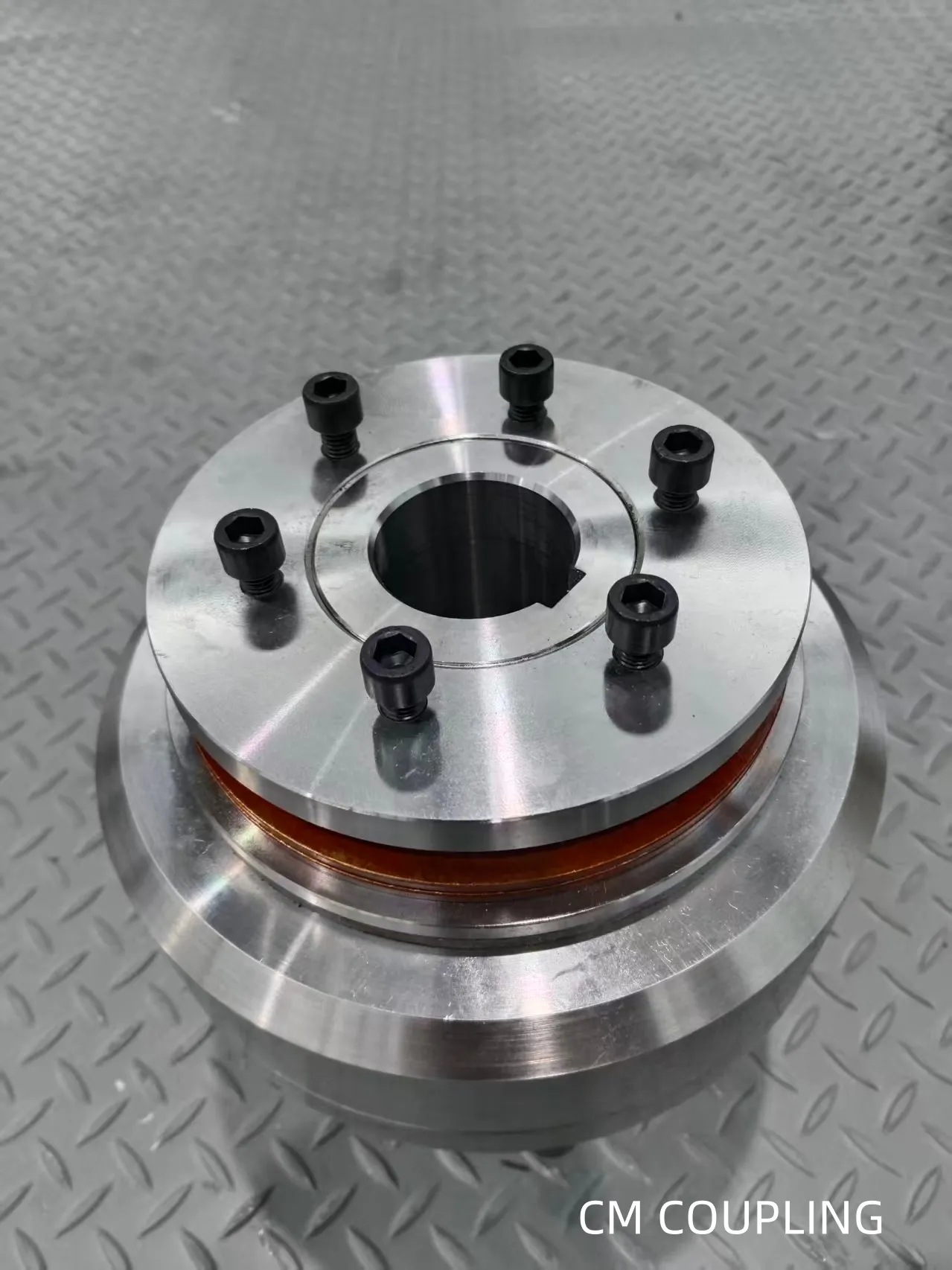
Stable torque transmission to optimize equipment operation performance further highlights its application value. The friction-type safety coupling can not only achieve overload protection but also transmit torque accurately and stably under normal working conditions. Through the buffering effect of the friction plates, it absorbs vibrations and impacts during transmission, reduces the impact caused by shaft system deviation, lowers the noise and wear during equipment operation, and extends the service life of the entire transmission system. At the same time, designers can accurately set the rated transmission torque of the coupling by adjusting the pressure of the preload spring, adapt to the load requirements of different equipment, ensure that the torque transmission error is controlled within a reasonable range, and meet the use requirements of high-precision transmission scenarios, such as machine tools and servo transmission systems.
Wide adaptability to complex working conditions in multiple industries highlights its versatility advantage. With the characteristics of diverse structures and strong durability, the friction-type safety coupling can flexibly adapt to different working environments according to the working condition requirements of different industries - whether it is a steel smelting workshop with high temperature and more dust, a petrochemical device with high load and continuous operation, or a high-precision and low-noise automatic production line, it can play a stable role in protection and torque transmission. At present, this type of coupling has been widely used in various equipment such as wind farms, port cranes, conveyor belts, extrusion granulators, and printing machinery, becoming an indispensable key safety component in industrial transmission systems.
With the development of industrial production towards intelligence, continuity, and high precision, the requirements for equipment safety and production efficiency are constantly improving, and the role of the friction-type safety coupling is becoming more and more prominent. It can not only effectively avoid the risk of equipment damage due to overload and reduce economic losses but also provide core guarantee for the continuity and stability of industrial production through the advantages of automatic reset and stable torque transmission. In the future, with the continuous upgrading of manufacturing technology, the friction-type safety coupling will achieve further breakthroughs in torque control accuracy, wear resistance, and adaptability range, empower the transmission safety of more industries, and help the high-quality development of industrial production.
In the core transmission systems of industrial production, the stable operation of key equipment such as motors and reducers directly determines production efficiency and safety. As a "safety guard" connecting the power source and the working mechanism, the friction-type safety coupling, with its unique structural design and precise protection mechanism, has become a key component to avoid equipment damage and reduce production losses, widely used in various industrial fields such as iron and steel, petrochemical, machine tools, and ports.
The friction-type safety coupling is a core category of safety couplings, whose core mission is to achieve the dual goals of "stable power transmission" and "intelligent overload protection". It breaks the single limitation that traditional couplings can only transmit torque. Through precise mechanical design, it builds an automatically responsive and quickly resettable safety barrier for the transmission system, solving the problem of equipment damage caused by sudden faults such as overload and jamming in industrial production.
Overload protection to safeguard the safety of core equipment is the most core function of the friction-type safety coupling. In the process of industrial transmission, sudden situations such as equipment jamming, material blockage, and load mutation often occur. Once the torque exceeds the rated range of the system, without effective protection, it will directly lead to irreversible faults such as motor burnout, reducer gear damage, and transmission shaft breakage. This not only requires high maintenance costs but also causes long-term unplanned downtime, resulting in huge production losses. According to industry data statistics, in key equipment such as extrusion granulation units, more than 20% of unplanned shutdowns are caused by coupling failure, and the friction-type safety coupling can avoid this risk from the root. Its working principle is based on the friction transmission and overload slipping mechanism, consisting of a driving disc, a driven disc, friction plates, and preload springs. Under normal working conditions, the axial pressure exerted by the preload springs makes the friction plates fit closely, and the torque of the driving end is stably transmitted to the driven end through static friction; when the torque exceeds the preset threshold, relative sliding occurs between the friction plates, instantly cutting off power transmission and limiting the continuous transmission of torque, thereby protecting core equipment such as motors and reducers from damage, which is equivalent to installing an "overload protector" for the transmission system.
Automatic reset to improve production continuity is a significant advantage that distinguishes the friction-type safety coupling from other types of safety couplings. Different from couplings such as shear pin type that require component replacement to resume transmission, the overload protection of the friction-type safety coupling is reversible - when the overload fault is eliminated and the system torque returns to normal, the friction plates will re-fit under the action of the preload springs, automatically restore the static friction state, and resume transmission quickly without manual intervention to replace components, greatly shortening the downtime for maintenance. This automatic reset function is of great significance for fields that require continuous production such as petrochemical, iron and steel, and port cranes, which can effectively reduce downtime losses, improve production efficiency, and reduce the workload of operation and maintenance personnel.
Stable torque transmission to optimize equipment operation performance further highlights its application value. The friction-type safety coupling can not only achieve overload protection but also transmit torque accurately and stably under normal working conditions. Through the buffering effect of the friction plates, it absorbs vibrations and impacts during transmission, reduces the impact caused by shaft system deviation, lowers the noise and wear during equipment operation, and extends the service life of the entire transmission system. At the same time, designers can accurately set the rated transmission torque of the coupling by adjusting the pressure of the preload spring, adapt to the load requirements of different equipment, ensure that the torque transmission error is controlled within a reasonable range, and meet the use requirements of high-precision transmission scenarios, such as machine tools and servo transmission systems.
Wide adaptability to complex working conditions in multiple industries highlights its versatility advantage. With the characteristics of diverse structures and strong durability, the friction-type safety coupling can flexibly adapt to different working environments according to the working condition requirements of different industries - whether it is a steel smelting workshop with high temperature and more dust, a petrochemical device with high load and continuous operation, or a high-precision and low-noise automatic production line, it can play a stable role in protection and torque transmission. At present, this type of coupling has been widely used in various equipment such as wind farms, port cranes, conveyor belts, extrusion granulators, and printing machinery, becoming an indispensable key safety component in industrial transmission systems.
With the development of industrial production towards intelligence, continuity, and high precision, the requirements for equipment safety and production efficiency are constantly improving, and the role of the friction-type safety coupling is becoming more and more prominent. It can not only effectively avoid the risk of equipment damage due to overload and reduce economic losses but also provide core guarantee for the continuity and stability of industrial production through the advantages of automatic reset and stable torque transmission. In the future, with the continuous upgrading of manufacturing technology, the friction-type safety coupling will achieve further breakthroughs in torque control accuracy, wear resistance, and adaptability range, empower the transmission safety of more industries, and help the high-quality development of industrial production.